

Insights from London Climate Week
A scorching 39°C heatwave set the backdrop for this year’s London Climate Action Week (LCAW), as more than 100,000 participants, gathered across over 1,300 events, in one of the world’s leading financial centers. The contrast was impossible to ignore. Discussions about future climate risks unfolded while the city itself experienced the realities of a warming world.
Climate change is no longer a distant threat. London’s extreme temperatures underscored the urgent need for resilient cities, stronger adaptation measures, and policies capable of protecting communities from increasingly frequent climate impacts.
Throughout the London Climate Action Week, F20 Secretary General Katrin Harvey and Project Support Officer Raissa Joplo actively contributed to the program. Together, they co-hosted three events:
- Growth, Debt and Climate Resilience: A High-Level Dialogue with the Chairperson of the Africa Expert Panel, organized by the African Climate Foundation (ACF)
- Pathways for resourcing community-led climate solutions: a multistakeholder dialogue promoted by Global South funds, organized by The Global South House,
- Catalyzing Climate Governance in Africa & Latin America: Validating the ICCN Africa & Latin America Regional Strategic Plans, organized by ICCN & E3G.
Beyond that, Harvey and Joplo also participated in eight partner-led discussions and held bilateral meetings with nine organizations to strengthen collaboration ahead of upcoming international milestones. Here are their main takeaways.
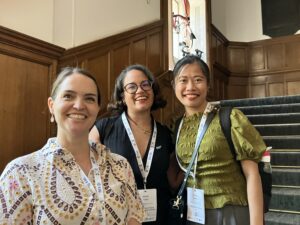
Africa & the broader Global South within the Global Macroeconomic Imbalances
The high-level dialogue addressed the disproportionate climate burden faced by Africa and the broader global south. This conversation explained how global financial systems continue to limit countries’ ability to invest in resilience and sustainable development. One thing was clearly stated: The moment has arrived for Africa to assert its pivotal strategic role within the global framework and to advocate vigorously towards increased resources and expanded fiscal spaces. F20 stands with Africa on enabling more spaces, voices, and participation from the region into global policy arenas.
During the panel, participants heard from leaders in development finance, philanthropy, and subject matter experts such as Trevor Manuel, Chairperson of Africa Experts Panel, Michael Hugman, from Quadrature Climate Foundation, and Helen Mountford, President and Chief Executive Officer of ClimateWorks Foundation, among others.
The speakers’ message was clear: philanthropy has a unique role in unlocking climate finance. However, this goes beyond providing grants, as philanthropic organizations can help mobilize public and private investment, and support locally led initiatives or approaches that governments and markets may be reluctant to fund. At the same time, speakers stressed that lasting progress will also require reforms to the global climate finance system itself.
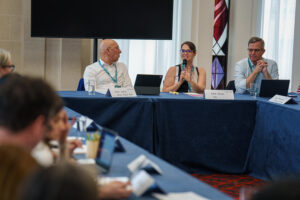
On resourcing community-led climate solutions
The“Pathways for resourcing community-led climate solutions: A multistakeholder dialogue” promoted by Global South Funds, built on these discussions. Organized by the Global South House, the conversation convened representatives from governments, multilateral funds, philanthropic organizations, financial institutions, indigenous peoples’ groups, and civil society to examine existing financial structures and collaboratively forge new paths towards a more equitable and territorially grounded climate transition.
As presented in the conversation, numerous locally led strategies are already happening on the ground and can redefine climate finance. Yet, a significant disparity on how investments are reaching these critical community initiatives persists. People working to reduce climate risks, often those on the ground and most vulnerable to risks, strikingly receive less climate finance. According to the expert speaker Marilyn Waite, climate solutions only require an estimated 6% of the world’s total GDP. However, visibility and paths to channel greater investments towards the Global South are not structured.
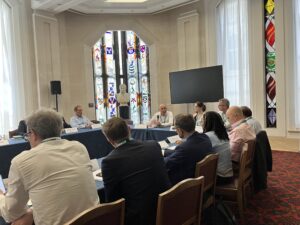
Participants also stressed the importance of “decolonizing capital”. Directing resources to locally managed funds is not only a question of equity: it is also one of effectiveness. Traditional financing models often reinforce North-South power imbalances and make it harder for community-led initiatives to access funding.
Katrin Harvey emphasized the financial and societal repercussions of inaction and neutrality far outweighing the costs of proactive engagement. These severely hinder the flow of essential funding to local communities. She urged philanthropies and foundations to leverage their influence, advocating strenuously for the prioritization and support of locally led climate solutions, and drawing valuable lessons from South-South funding practices.
Strengthening Climate Governance in the Global South
Beyond finance, another key discussion focused on strengthening climate governance structures across the Global South. Climate governance in Africa and Latin America faces significant fragmentation. A high-level breakfast on “Catalyzing Climate Governance in Africa & Latin America: Validating the ICCN Africa & Latin America Regional Strategic Plans” organized by ICCN identified a solution. Local advisory councils are uniquely positioned to address this complexity. These councils draw on scientific expertise and national development priorities.
With the consensus of the group, the Strategic Plans will adopt robust, long-term advisory institutions. This approach moves beyond strict “climate council” labels and promotes creative engagement with a broader ecosystem of national coordination entities.
Capacity building support is also a significant element to help link scientific advice directly to practical outcomes, rather than mere standalone publications. Such examples include direct links to Nationally Determined Contribution (NDC) pathways, investment platforms, and resilience planning.

Katrin Harvey brought forward the important role of integrating suitable communication aspects to demand accountability. Learning from experience, packaging scientific evidence into relatable narratives for different groups holds more authority and support on holding decision-makers accountable.
A Moment for Sustaining Action and Continuation
Beyond the public program, F20 met with a range of philanthropic networks and partner organizations to strengthen collaboration ahead of the UKs G20 Presidency. These meetings were with Bond, the Australian Environmental Grantmakers Network (AEGN), WINGS, the international Rescue Committee (IRC), Fundación Avina, the Association of Charitable Foundations (ACF), London Funders, the Environmental Funders Network, and the John Ellerman Foundation.
We also had a discussion with the Australian Environmental Grantmakers Network and WINGS to highlight the importance of strengthening philanthropic cooperation ahead of COP31, which will be jointly hosted by Australia and Türkiye. We explored opportunities to identify shared priorities and build stronger collaboration across regions.
F20 has started to lay the groundwork for the UK G20 Presidency through consultations with UK-based philanthropy and foundations network, in collaboration with WINGS. Together, we developed a two-pronged approach, where we will offer an informative session to introduce G20 to UK philanthropic stakeholders, which will be complemented by sharing the best practices and initiatives that are already working. Through these interventions, we aim to successfully ignite interest in local actors within the next G20 host country and reinforce real, impactful actions.
Other worthwhile events that F20 had the pleasure to attend include Global Commons Alliance’s (GCA) discussion on adopting bigger strategies to get out from working in silos, the launch of the World Risk Poll 2026 y the Lloyd’s Register Foundation, E3G ‘ s high-level Climate Governance Forum, Ban Ki Moon Foundation’s roundtable on the nexus between food security and global stability, Fundación Avina’s session on centering Resilience to People, Dasra’s Indian Philanthropy Forum, and Pineapple Partnership’s Pineapple Day 2026 on scaling sustainable impact.
The blazing week concluded with the African Climate Foundation’s 2026–2030 Strategy Dinner, a celebration that reflected many of the themes discussed throughout the London Climate Action Week: African leadership, innovation, collaboration, and a shared vision for climate action.
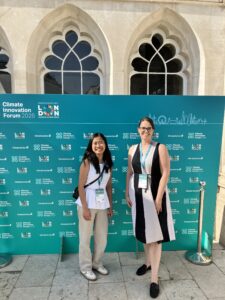
Through music, storytelling, and cuisine, the evening offered a powerful reminder that climate action is ultimately about people and partnerships. F20 leaves London Climate Action Week carrying forward the spirit of Ubuntu, the belief that our collective wellbeing depends on one another, as inspiration for the work ahead.
Why G20 must Support Locally Led Adaptation Financing to Tackle the Climate Crisis in Africa