

2025 was an extremely challenging year for federal climate work in North America, as changes in administration, austerity measures and public backlash caused U.S. and Canadian governments to roll back key climate policies. At the same time, everyday people are feeling the pressure of a growing affordability crisis, as well as a “new normal” of year-round climate impacts including drought, wildfires, flooding and heat waves that are wiping out communities, diminishing health and safety, and driving up insurance costs each year.
Within this difficult context, in the spring of 2025, Canada’s Trottier Family Foundation embarked on a strategic process to diversify its climate funding, deepen its climate justice efforts, and advance environmental solutions that also address our communities’ real and pressing economic, social and health concerns. This approach starts from the premise that when people experience positive material impacts from climate projects and policies—through access to well-paying local jobs, shorter commute times, availability of healthy food, and safe air, land and water—they will champion those solutions in their communities and at the ballot box.
Leaders who hail from the communities they represent and serve are the ones best positioned to develop these types of winning environmental policies and projects. In North America, these leaders disproportionately hail from Indigenous, Black, working-class and racialised communities that have historically been excluded from climate policy development, marginalised by underinvestment, and overburdened by pollution.
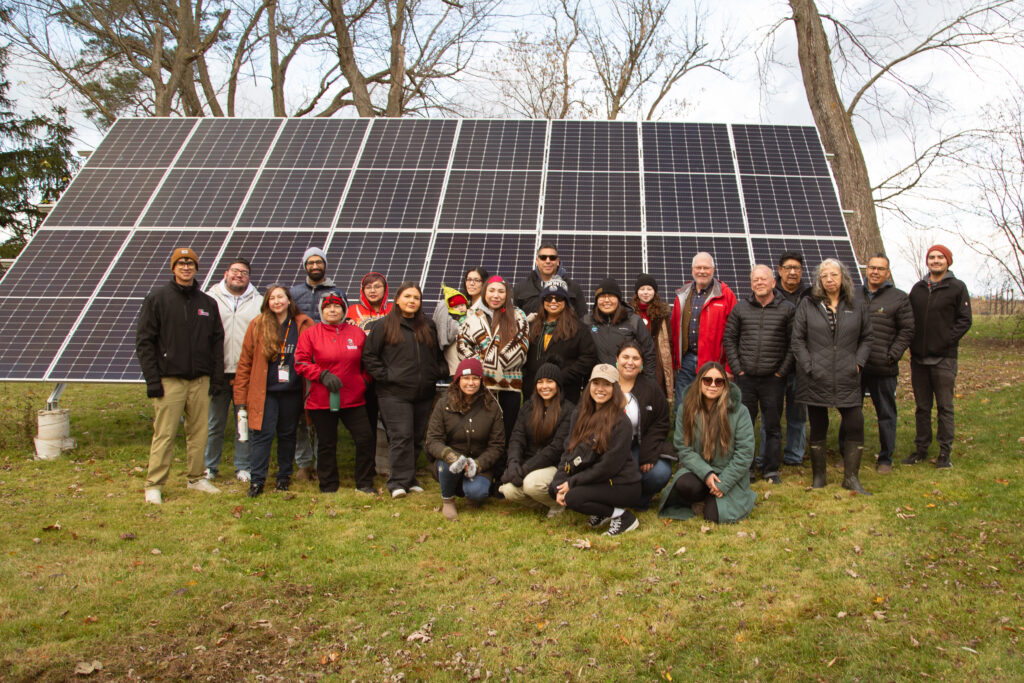
To deepen its climate justice strategy, the Trottier Family Foundation partnered with Catalyst Philanthropy (led by Vani Jain and Katie McKenna, with guidance from Rebecca Darwent and Nicole McDonald) who interviewed over twenty Canadian climate justice leaders and funders about their work and the challenges and opportunities they see for the movement.
What emerged was a series of direct, often surprising and sometimes even hopeful recommendations that we gathered in our 2026 report, Climate Wellbeing and Community in Canada, which we are proud to summarise here.
Lessons from climate justice leaders
At a time when diversity, equity and inclusion policies are under attack, climate justice leaders in Canada were clear that they were not looking to be funded as part of an “equity play.” They want their work to be recognised and funded on its own well-deserved merits and impacts – not as part of a check-box exercise. For example: today, First Nations, Métis, and Inuit organisations are partners or beneficiaries in nearly 20% of Canada’s country’s clean electricity infrastructure, despite making up only 5% of the population – and there’s still massive potential for this sector to grow.
Another hopeful lesson was the degree to which climate justice leaders are already building training and mentorship programs in their communities to meet the growing backlog of jobs in climate adaptation, clean energy, environmental policy, and green construction. Both climate leaders and funders we spoke with emphasised how climate projects outside of big cities are often hampered by not having leaders with the right training or skills in place to anchor them. Developing and maintaining this talent pipeline is an essential and underfunded area in our field.
The climate leaders we spoke with were blunt about challenges facing the field (many of which are also opportunities for funders to help address): the lack of opportunities for climate leaders to learn, network and build alliances; the importance of new climate organising techniques that resonate in our current culture; the specialised needs of youth-led climate organisations that often aren’t met through traditional funding; the lack of investment in healing, recovery, and reflection spaces to keep frontline and community organisers from burning out; and the lack of partnerships with faith communities to expand and diversity the climate movement.
We were interested to learn that many interviewees avoid using the term “climate change” when advancing projects in their communities, instead focusing on the project’s material outcomes – things like housing upgrades, affordable transport, community-owned energy, and preparing for floods and heatwaves — all of which resonate more with people’s everyday concerns.
Finally, leaders also emphasised how much funders’ non-monetary support can impact their work: an introduction to a policymaker, an invitation to speak at a conference, or a mention of their work to another funder are all gestures that can have huge potential ripple effects in the field.
Lessons from climate justice funders
Like the climate leaders we met, the funders we spoke with emphasised the importance of engaging with climate justice work from a strategic rather than moral standpoint, and that this was a critical success factor for long-term engagement. For new funders in the field, they encouraged proactive learning and relationship-building to become familiar with existing research and find new allies.
Our interviewees outlined what they see as emerging best practices in climate justice funding: simplifying applications and reporting; providing unrestricted, multi-year grants; funding organisations that aren’t registered charities; supporting endowment transfers that help communities build their own philanthropic vehicles; using community-led regranting, which entrusts leaders closest to the field to make the funding decisions; and joining funder collaboratives to share learning, strengthen relationships, and act in solidarity with communities in struggle.
They also enthusiastically shared their own areas of experimentation, including embracing ‘gift grants’ (small funding envelopes awarded without an application, to build relationships with new players); using light-lift open calls to learn about organisations in the field who might be under the radar; and investing in movement-building efforts to ensure that the next round of ambitious federal climate policies have widespread popular support.
Conclusion
We share these lessons from the leaders and funders with enthusiasm and humility— knowing that we are only at the beginning of our journey and that many others are walking this path with us. Our hope in sharing them with the F20 community is that they spark dialogue, strengthen partnerships, and inspire continued innovation in pursuit of just and lasting climate solutions in Canada and around the world.
Climate Solutions Magazine: April 2026
We encourage you to read this edition of the F20 Climate Solutions Magazine in full. We invite you to take some time to read these thought-provoking articles, which focus on the leaps and bounds that can be made in climate work through networked learning and local, community-led action.
Expand the preview below and immerse yourself in these thought-provoking articles.