

In 2020, a non-profit working across 600 villages in a densely populated Indian state was struggling to keep their lights on. For nearly four decades, they had introduced smallholding farmers to crops and farming techniques to withstand climate change, backed women from some of the most marginalised communities in India to start small businesses, and connected people to welfare schemes. So, when the COVID-19 pandemic hit, the communities they served – the majority of them farming families living on less than $0.32 a day – turned to them for access to basic necessities and government relief.
However, the organisation itself had no buffer. They were struggling to pay their stretched staff, arrange safe travel for field workers, and appeal for funds to donors who didn’t know they existed. With existing funding structures rarely allowing small, local organisations to invest in themselves, the very groups communities rely on in times of distress were faltering.
A Broken System at the Heart of Climate Action
The grassroots non-profit network in countries like India is crucial for building climate resilience. These organisations can feel the impact of climate change at the exact magnitude as the communities they serve. Rooted in place, they have witnessed how winter rains have started to spoil harvests, how trees that once thrived are now dying out, and how villages have emptied of boys and men who work as wage labour in cities because of failing crops. Yet the funding systems meant to support them have never enabled them to build their own resilience. This is the contradiction at the heart of climate action.
In developing economies, the impact of climate change is outsized. Between 2020 and 2023, nearly 23 million people across Ethiopia, Kenya and Somalia lost food security following the most severe drought in Africa in 20 years. In 2024, Brazil witnessed its worst drought and water levels in the Amazon river fell to a record low. In India, extreme rainfall events have surged by 1.4 times in the past five years. Intensifying heatwaves have reportedly cost the country $194 billion in potential income in 2024. From disaster response to survival training, small and mid-sized organizations are often the first line of defence for vulnerable communities — yet a Bridgespan survey of Indian NGOs found that nearly 80% struggle to secure funding for their own organisational development.
What Happens When You Fund Institutions, Not Just Projects
In 2021, as part of the GROW program, EdelGive rallied 37 funders to pool in nearly $12mn and back 100 grassroots non-profits across India. Not for programs, but to help them get back on their feet amid the effects of the pandemic. The results were striking. With training in fundraising, these grassroots non-profits went on to raise $15.9mn in additional funding, organisational development support helped 37% of them build financial reserves, and 93% had a leadership pipeline for the first time.
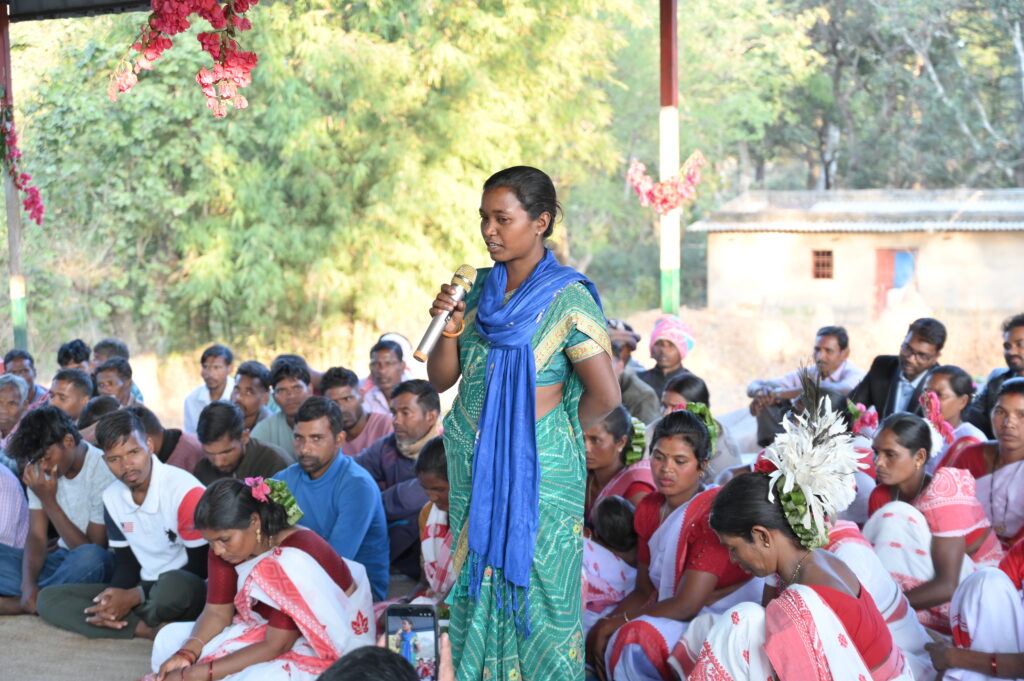
Given the choice, the organisations first spent on things that helped them keep their heads above water. In the first quarter, some bought their first laptops and cameras, some rented office spaces in far-flung locations where they were needed, some bought chairs and tables for staff, some bought cabinets to store equipment, some learnt to use social media to finally share the work they have been quietly doing for ages.
The non-profit mentioned at the beginning of this piece first paid pending salaries, then upgraded their decades-old computing systems, replaced their old accounting software with newer ones. This gave their staff breathing space, and then they went on to write better proposals, acquire more funding, make technical hires and started planning expansion to new states.
From Strong Non-Profits to Climate-Ready Systems
GROW’s success was rooted in three shifts: prioritising flexible, non-programmatic funding, putting institutions first, and enabling trust-based partnerships with strong compliance—resulting in non-governmental organisations (NGOs) that were more resilient and confident. However, with the impact and complexity of climate change intensifying across the country, we realised strengthening individual institutions alone was not enough.
Our new fund GROW+ builds on the principles of GROW by incorporating a climate and systems lens. Organisations are additionally backed with climate intelligence, place-based approaches, and networked learning. Eventually, these NGOs will evolve from being strong to becoming climate-aware, place-responsive, and collectively effective.
GROW+ has divided India into six distinctive landscapes – Northern Plains, Himalayan Mountains, Islands, Peninsular Plateau, Coastal Plains, Indian Desert. Each region is organised into pyramids anchored by mid-sized nonprofits with strong networks and capacities, working with 15–20 smaller NGOs addressing region-specific climate challenges. Together, these pyramids create an ecosystem of shared knowledge and climate intelligence.
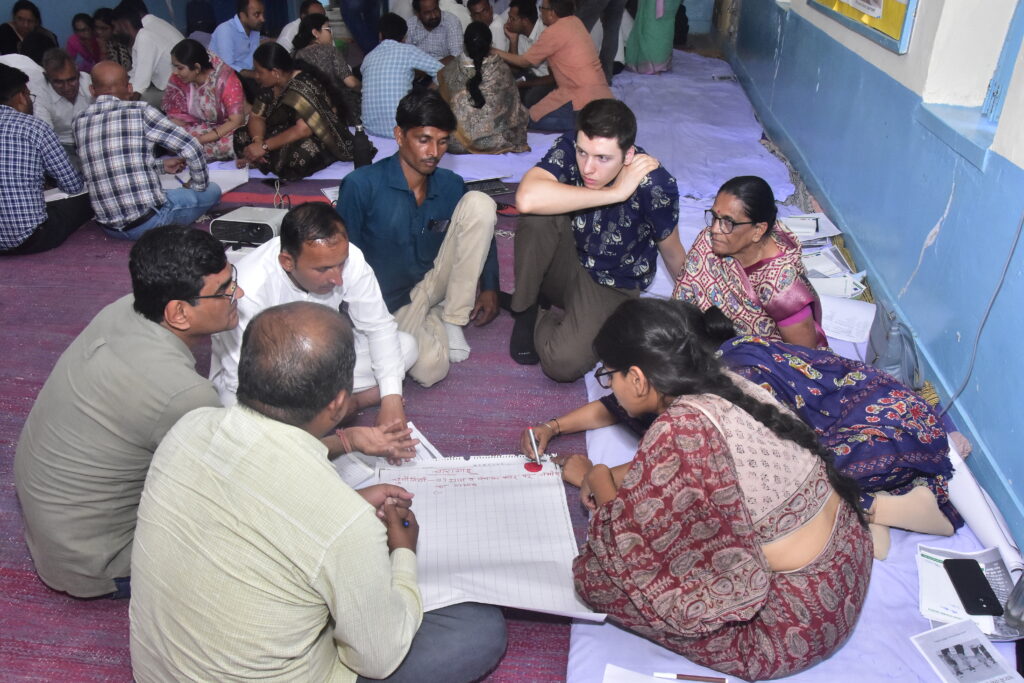
With just 2.4% of the world’s land, India accounts for nearly a fifth of the global population. Climate solutions here not only need to respond to hyperlocal needs but also work around local resources and resonate with the country’s diverse cultures. For example, in the eastern Indian state of Jharkhand, where GROW+ operates, there are more than 290,000 government‑supported women’s self‑help groups. These are voluntary collectives meant to bolster rural livelihoods and financial inclusion. Development work by local non‑profits often begins with organising women into these collectives, not just because climate emergencies disproportionately affect them, but because they are custodians of hyperlocal knowledge and carry significant socio‑economic responsibilities. Aware of layered challenges, these non‑profits build resilience from the ground up. For some communities, this means introducing climate‑adaptive agricultural practices; for others, it involves entrepreneurial training, access to finance, or connecting traditional handicrafts to wider markets. With support from local non-profits these groups become the nuclei from which learning and capacity strengthening ripple through the communities.
Building Networked, Place-Based Climate Ecosystems
We witnessed the peer networking model in action a few weeks ago when a cohort of non-profits from India’s desert region flew in for a convening with NGOs working in the plateau region. Fluent in the visual markers of drought, the desert-based organisations alerted their plateau-based counterparts to pockets of land spotted from their flight that showed early signs of drought. Many organisations in the plateau – a region that receives more rainfall – are not uniformly equipped to predict, prepare for and respond to droughts. But with rain becoming increasingly erratic, this is something they will have to learn. The GROW+ architecture is built to enable exactly this kind of formal and informal knowledge sharing.
In 2024, 45.8 million people around the globe were internally displaced due to extreme climate events. The World Bank predicts that by 2050, 216 million people will be displaced across just six regions in the world due to climate change. The GROW+ model is rooted in India but designed for a world trying to catch its breath amid escalating climate emergencies.
Climate change is forcing a shift in how resilience is built — from top-down programs to locally rooted systems that can anticipate and respond in real time. Yet a very small share of global climate funding reaches local actors. This must be rebalanced with urgency. Because the future of climate action will be shaped by how well we invest in the institutions and systems closest to the crisis.
Climate Solutions Magazine: April 2026
We encourage you to read this edition of the F20 Climate Solutions Magazine in full. We invite you to take some time to read these thought-provoking articles, which focus on the leaps and bounds that can be made in climate work through networked learning and local, community-led action.
Expand the preview below and immerse yourself in these thought-provoking articles.
Sources:
The state of climate response in India
Brazil faces its worst drought as wildfires rage and Amazon River falls to record low | PBS News
During Brazil’s worst drought, wildfires rage and the Amazon River falls to a record low | AP News
Horn of Africa hunger crisis pushes millions to the brink | World Food Programme
India Logs 5.4 Million Disaster Displacements in 2024, Highest in 12 Years