
Philanthropy helps governments move from consensus to implementation
19th November 2026
Our insights from COP31. Written by Dulce Fabiola Vega. Edited by Katrin Harvey.
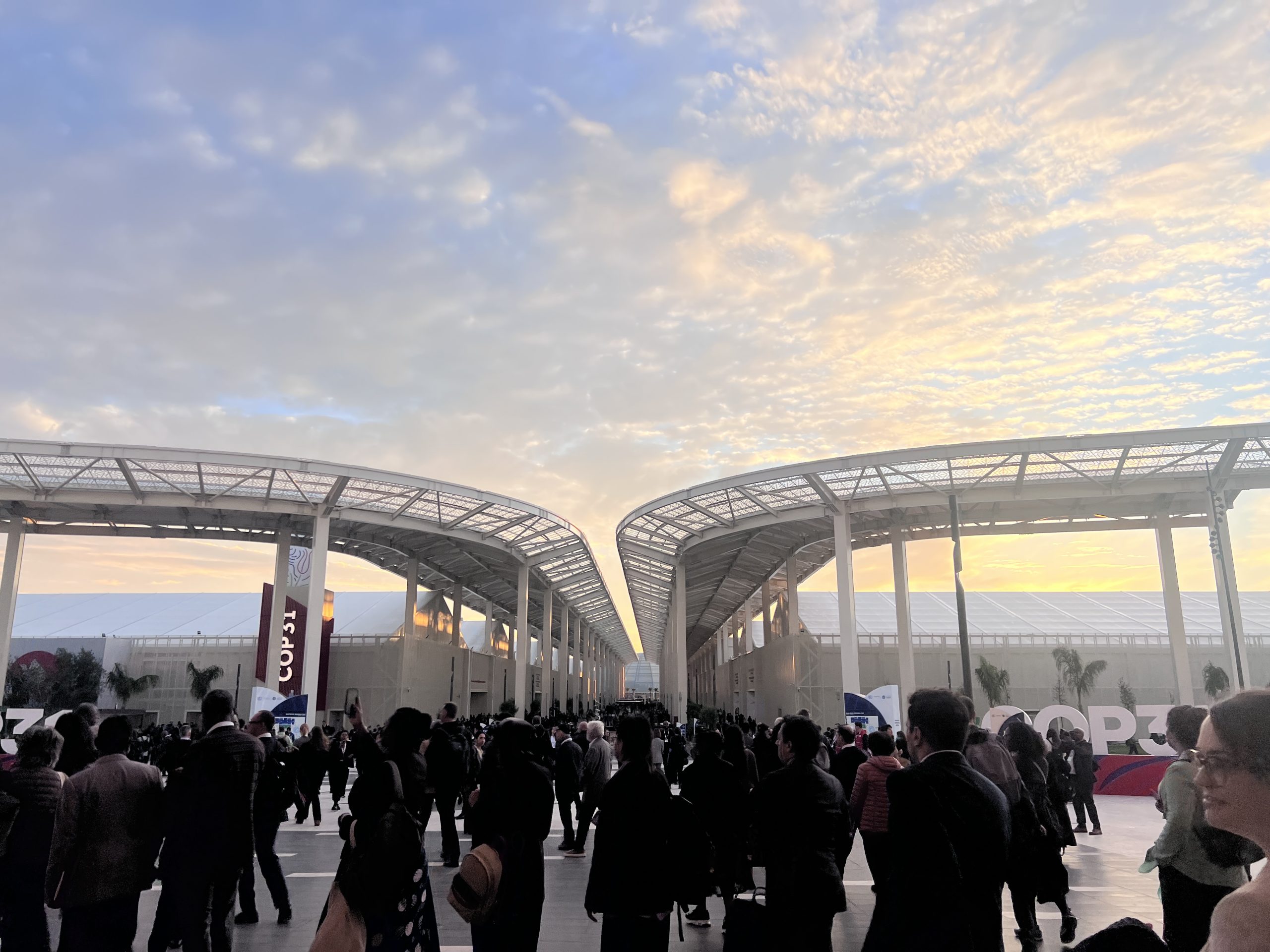
Walking through COP31, one image stuck with me: ants. Around 90,000 people converged on Antalya, moving from pavilion to pavilion and meeting to meeting, each driven by the same urgency to carry forward solutions that make lives safer and more just. Framed as the “Implementation COP,” the prevailing atmosphere made it clear that the era of mere consensus is behind us. Yet implementation and consensus are still stuck on one central question: who pays?
For our network of over 80 foundations, this is where the conversation turns critical. Philanthropy cannot and should not fill the climate finance gap, but it plays an indispensable role as a strategic ally helping governments do their job, particularly across the G20 where the vast majority of global emissions and capital reside.
The funding tension was unavoidable after the “Summer of Truth” this year, in 2026, when extreme heat shifted from a future forecast into an immediate macroeconomic and health crisis. As leaders from the World Health Organization, Laudes Foundation, and Mahindra Group highlighted at the session From Panicked to Proven: Practical Pathways to Heat Resilience Built by Business and Workers, extreme heat already damages GDP growth and threatens 2.4 billion workers worldwide. Proven solutions exist, from urban cooling hubs to frontline labor protections, alongside sharper calls for accountability. As UN chief António Guterres put it in his speech: “It is make or bake time.” But for making, everybody needs funding.

Philanthropy is doing its part.
The clearest takeaway from my time at COP is that the philanthropic community is evolving from traditional grant-making into a vital role as a systemic partner, actively demonstrating where and how capital can flow.
Members of our network showed what this looks like in practice. CIFF and ClimateWorks, for example, are among the funding partners behind the Antalya Communiqué and the Global Heat Resilience and Sustainable Cooling Roadmap, which governments backed on 17 November, connecting philanthropic capital directly to the heat crisis. At the same time, CIFF joined a coalition of philanthropies that announced plans to commit US$88 million to the Tropical Forest Forever Facility at the Leaders’ Summit, with weeks left to reach its US$10 billion goal. The Deutsche Bundesstiftung Umwelt also presented its marine conservation fund for the North and Baltic Seas at the German Pavilion, together with the Federal Environment Ministry and GEOMAR.
Philanthropy is making climate action accountable and investable. The Minderoo Foundation’s US$5 million commitment to the Pacific Resilience Facility, announced at COP31 alongside Australia’s Prime Minister, is what Minderoo describes as the facility’s first philanthropic contribution. The PRF is a Pacific-led, Pacific-owned fund designed to deliver grants directly to communities. It joins government funding, led by Australia’s A$100 million, toward a US$500 million target, and aims to give other funders the confidence to follow. Another example is the strategic funding that also enables the early operational capacity for nationally owned Country Platforms. As experts like Raisa Cole of the Presidential Climate Commission and Dr. Pavlos Troulis of the Green Climate Fund explained, these platforms are vital to de-risk projects, lower capital costs across the Global South, and turn broad national ambitions into pipelines ready for private investment.
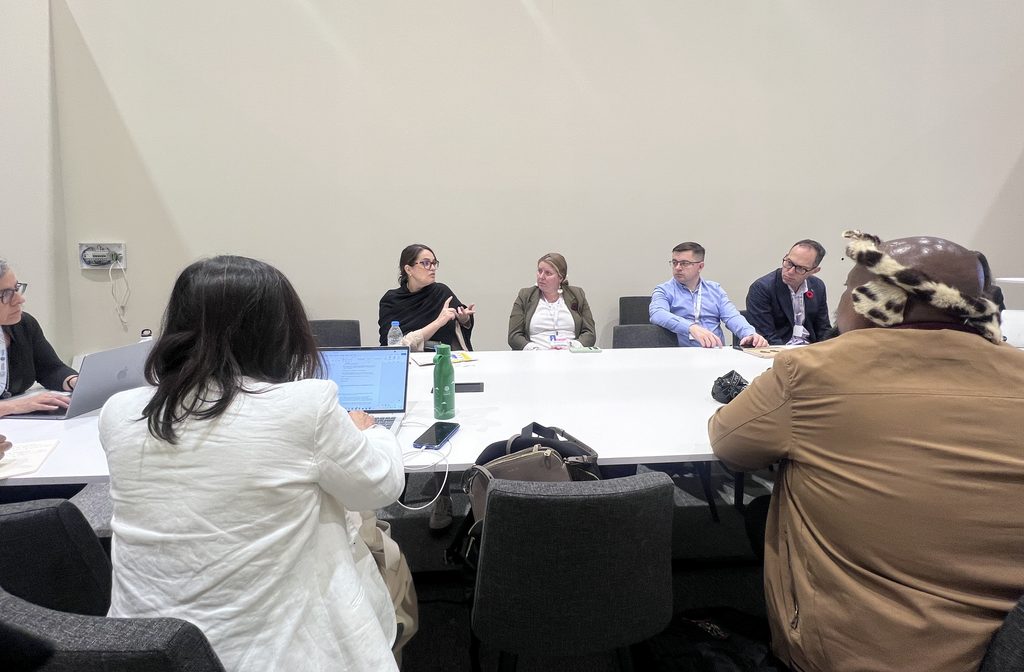
On the other side, the philanthropic community provides the collaborative tissue for a genuinely just transition. From Fundación Avina advancing regenerative development in Latin America, to Bakti Barito working on four focus areas: Environment, Economy, Society, and Education, to the TAH Foundation convening players at COP31 around industrial decarbonization, foundations connect high-level policy with community reality.
High-level negotiations like those in Antalya are fully aware that climate impacts and greenhouse gases respect no borders, which makes international cooperation indispensable. However, multilateralism also faces a complicated backdrop: with eroded legitimacy and trust perception. While traditional multilateral channels are struggling, “minilaterals” and agile coalitions of the willing are emerging as vital tools to maintain momentum. As F20 Secretary General Katrin Harvey underscored in a conversation hosted by CEMUNE, this momentum will only hold if it is anchored in democratic accountability and real-world delivery. Here again, Foundations play an important part. The Sabancı Foundation was the first Turkish institution to sign the international Philanthropy Commitment on Climate Change and, with TÜSEV, launched the Türkiye National Philanthropy Climate Pledge in June, uniting 30 civil society organizations and grant-makers around a seven-pillar framework. A clear example of the kind of civil society backbone that keeps climate commitments accountable.

As negotiations continue, our role at F20 is clear: we will keep pushing G20 leaders to recognize philanthropy as an indispensable, catalytic ally, one capable of unlocking capital, de-risking innovation, and turning climate ambition into tangible reality on the ground. Just like those thousands of humans moving tirelessly across Antalya like ants, individual actions only transform into real power when connected to a shared, purposeful structure and network.