
GLOBAL FORUM
What is the G20?
The G20 brings together the world’s major economies, representing over 80% of global GDP. At Foundations Platform F20, we align our advocacy directly with the G20’s cycles and working tracks to drive meaningful climate action and sustainable development.
To ensure continuity and lasting impact, we mirror the G20’s Troika governance model, connecting past, current, and incoming presidencies.
Why do we engage with the G20?
The G20 is the premier international forum for global economic cooperation, accounting for over 80% of global GDP, 75% of international trade, and two-thirds of the world’s population. It brings together 19 leading industrialized and emerging economies alongside two regional bodies: the European Union and the African Union. The member countries include Argentina, Australia, Brazil, Canada, China, France, Germany, India, Indonesia, Italy, Japan, Mexico, Russia, Saudi Arabia, South Africa, South Korea, Turkey, the United Kingdom, and the United States.
By uniting diverse economic perspectives, the G20 is uniquely positioned to advance frameworks grounded in the UN Sustainable Development Goals (SDGs) and the Paris Climate Agreement.
Alongside the G20, the G7 unites seven of the world’s most advanced economies. As a key subgroup within the G20, the G7 plays a vital role in accelerating global climate solutions. Neither the G20 nor the G7 maintains a permanent secretariat. Instead, leadership rotates annually (Troika Principle), with host presidencies setting the agenda through ongoing Sherpa meetings, ministerial working tracks, and the culminating annual Leaders’ Summit.
While philanthropy thrives on long-term planning, international diplomacy often moves year-to-year. To build momentum and maintain continuity, Foundations 20 (F20) mirrors the G20’s Troika governance structure. Our Chair and Co-Chairs are appointed directly from philanthropic organizations rooted in the past, current, and incoming G20 host nations, ensuring ongoing dialogue across political transitions.
Who holds the G20 Presidency?
The United States currently holds the 2026 G20 Presidency, with the United Kingdom set to assume the presidency for the following cycle (commencing December 1, 2026).
To build genuine connections on the ground throughout the current term, Dr. Natasha Matic, Founding Executive Director of the Accountability Accelerator serves as the F20 Chair.
In true Troika spirit, this leadership bridges ongoing cooperation with Shannon Bernhardt, Programe Manager at Democracy Works Foundation in South Africa from the previous presidency, while laying the groundwork with UK partners for the cycle ahead.

When was the G20 founded?
Founded in 1999 in the aftermath of the Asian financial crisis, the G20 initially brought together finance ministers and central bank governors. It was created to broaden global economic dialogue beyond the G7/G8 and include the perspectives of emerging economies.
Following the global financial crisis, the G20 was elevated to the level of Heads of State and Government in 2008. This reflected the need for stronger international coordination and established the G20 as a central forum for global economic governance.
How does the G20 work?
The G20 Presidency rotates annually among its members, with each presidency setting priorities and guiding the work throughout the year.
The process culminates in the annual G20 Summit, where Heads of State and Government discuss shared global priorities.
The G20 also works through ministerial meetings, working groups and engagement with non-governmental stakeholders. The G20’s work is divided into two main tracks: The Finance Track and the Sherpa Track, alongside various Engagement Groups.
What does the G20 do?
The G20 promotes international financial stability, sustainable economic growth and global cooperation. Its work includes coordinating policies on trade, finance and financial-market regulation, while also addressing challenges such as climate change, poverty and global health.
Because G20 decisions shape international priorities and influence national policy, engaging with the forum is essential for advancing ambitious climate action. Through strategic advocacy we bring philanthropic perspectives and solutions to this process.
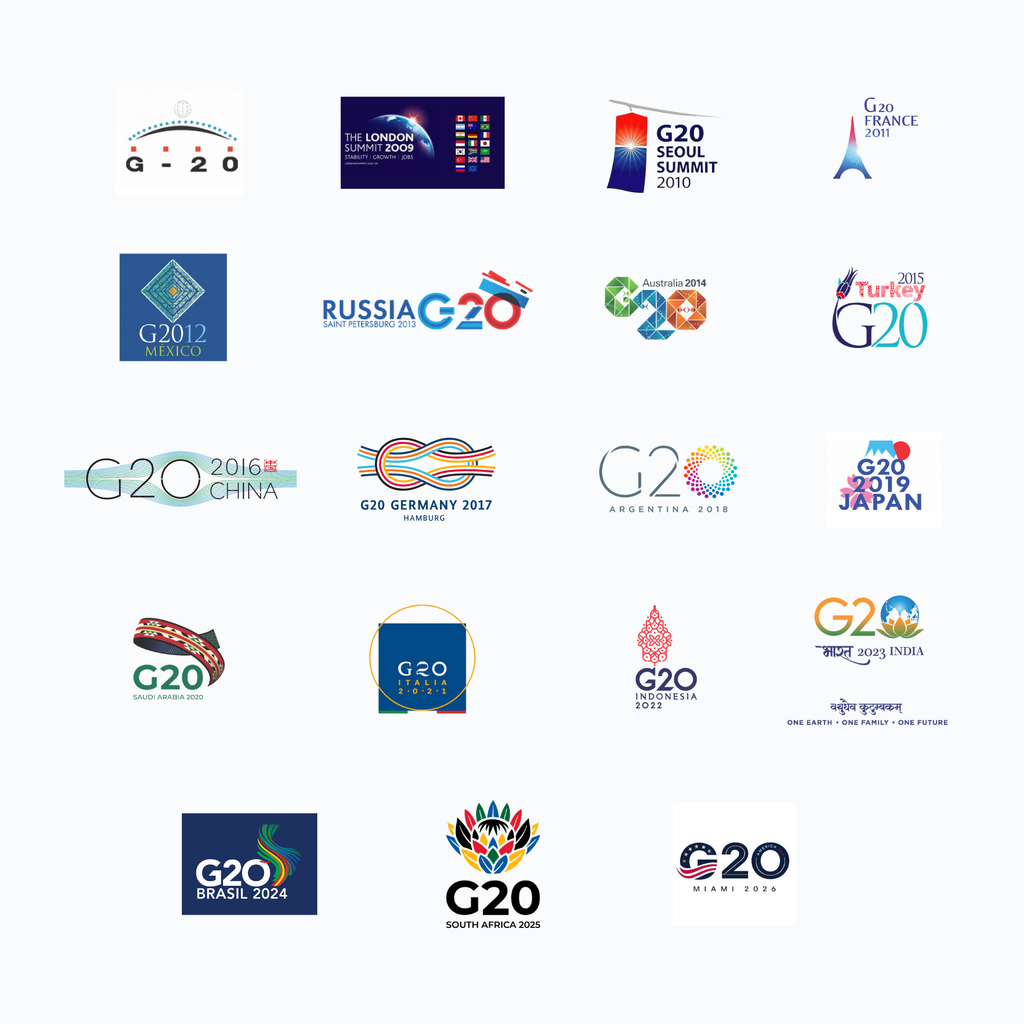
The G20’s work is divided into two main tracks: The Finance Track and the Sherpa Track, alongside various Engagement Groups.
What are the Engagement Groups?
The Engagement Groups are independent groups that represent various sectors of civil society, including business (B20), civil society organizations (C20), labor (L20), think tanks (T20), women (W20), youth (Y20), and urban issues (U20). These groups provide recommendations to the G20, aiming to influence its policies and decisions from the perspective of their respective sectors.
What are the Finance Track and the Sherpa Track?
The Finance track is focused on economic and financial issues and is primarily managed by finance ministers and central bank governors. It includes working groups and initiatives on the global economy, international financial architecture, financial regulation, international tax cooperation, and sustainable finance.
The Sherpa Track deals with a broader set of policy issues beyond the financial scope. Each G20 country appoints a Sherpa (personal representative of the leader) who negotiates on their behalf on issues including development, climate change, digital economy, employment, education, health, and anti-corruption. The Sherpa Track is responsible for preparing the leaders’ summit and ensuring the coherence and consistency of the G20’s various work streams.