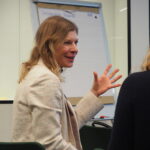
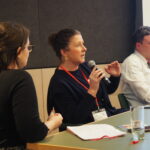
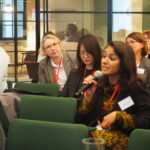
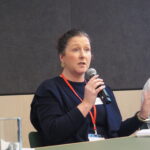
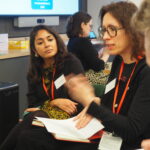
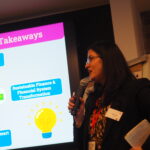
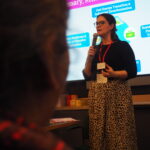
In the first week of February, the F20 team hosted a pre-launch dialogue which invited key actors in philanthropy, civil society, governments, and academia to contribute their expertise to our F20 2026 Recommendations to the G20. While the Recommendations are set to be published on the 12th of March, we understood that this was an opportunity to engage experts and decision-makers with our work early to ensure that our final policy recommendations were impactful and effective. The result was a full day of engaged conversation between attendees, speakers and moderators who worked together to frame the F20 2026 Recommendations to the G20 within the current geopolitical realities of the G20 process and explore pathways for sustaining ambition on climate, sustainable development, and inclusive participation during and beyond this year’s G20 presidency.
To kick off the day’s discussions, we were delighted to hear keynotes from Amal-Lee Amin, (Managing Director and Head of Climate, Diversity and Advisory, BII), and Jamie Drummond, (Founder, Sharing Strategies), who spoke about setting ambitious agendas aligned with innovative, hope-based vision across philanthropy, government, and civil society. Both of them acknowledge the importance of intentional and ambitious investment, supported by systemic changes across both international and local contexts.
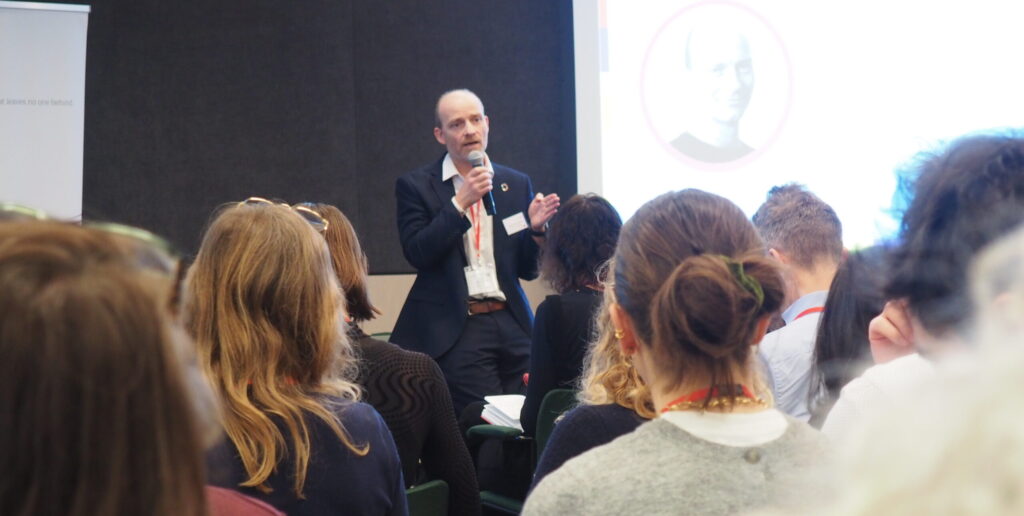
Supporting these keynote addresses were virtual remarks from two members of the F20 network who couldn’t be physically present in London, but who made an impact regardless. Lerato Maloka, Democracy Works Foundation’s (DWF) Engagement Manager, recounted DWF’s 2025 engagement with the South African G20 presidency through F20. She spoke about the catalytic role philanthropy played in translating global commitments into African-centred action. Natasha Matic, the Executive Director of the Accountability Accelerator and F20’s 2026 Chair, spoke about the significance of the G20 Troika system and how to align with US philanthropic actors who are aligned with F20’s vision and objectives.
This led to a panel discussion which was structured around F20’s seven core policy recommendations:
- Foster Economic Prosperity through a Just and Inclusive Shift to Renewable Energy
- Catalyse Sustainable Industrial Decarbonisation
- Transform the Global Financial System to Deliver Climate and Development Goals
- Strategically Align and Mobilise Flexible Financial Resources for Climate Action and Sustainable Development
- Advance Climate-Smart Agriculture for Food Security and Biodiversity Protection
- Promote Intersectional Environmentalism for Equitable Climate Solutions
- Strengthen Country Platforms for Effective and Inclusive Development Cooperation
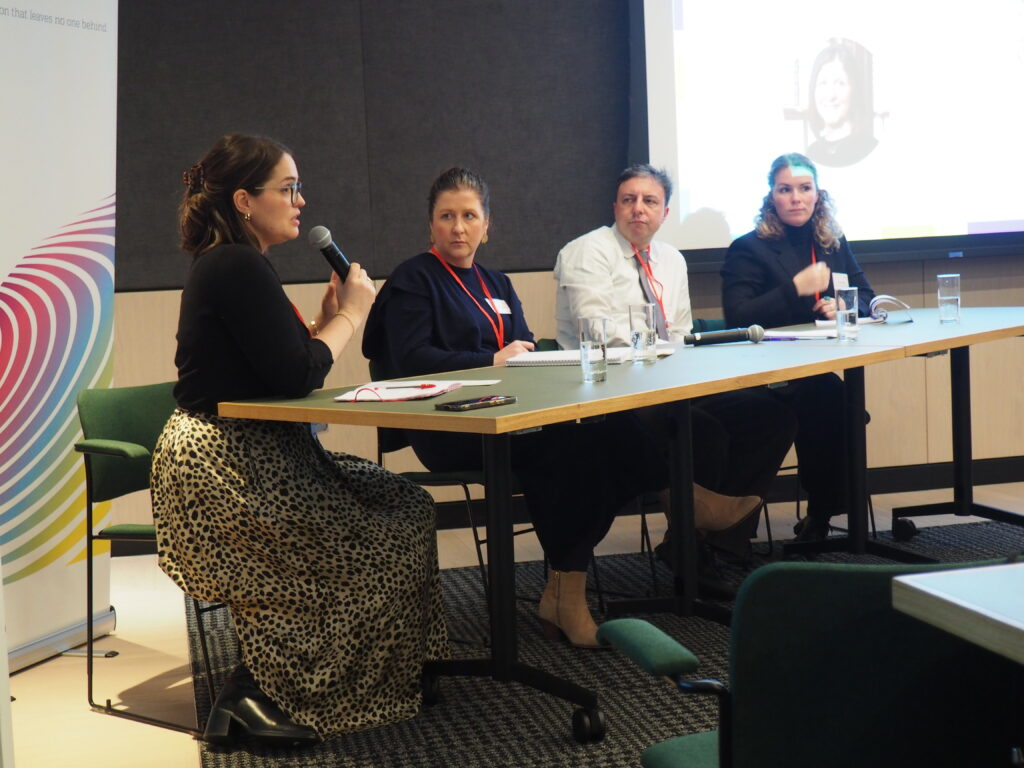
The panel discussion featured a lively and insightful conversation between Rosalind McKenna, (Senior Associate in the CEO Office, Children’s Investment Fund Foundation), Omar Bargawi, (Deputy Director and Head of Department for Development Policy and Partnerships, UK Foreign, Commonwealth & Development Office), and Manon Vigier (Policy Advisor for Private Sector and Development, French Ministry for Europe and Foreign Affairs). The panellists’ insights into G20 and G7 work, approaches to solidarity, and the balance between being ‘realistically ambitious and ambitiously realistic’ informed the World Café sessions.
Facilitated by Rana Adib (Executive Director, REN21), Jurei Yada (Director – Strategic Member State Engagement & Head of EU Sustainable Finance, E3G), Meera Shah (Senior Associate Scientist, AKADEMIYA2063), and Nicole Itano (Consultant/Lead, Funders’ Roundtable on the Future of Development, TAI Collective), we saw attendees discussing solution-oriented engagement, real-world implementation of their extensive topical knowledge across all seven core policy focuses. Across each topic, the F20 team received carefully considered and well-informed suggestions for adjustments to our 2026 Recommendations, which we have integrated to improve the final document.
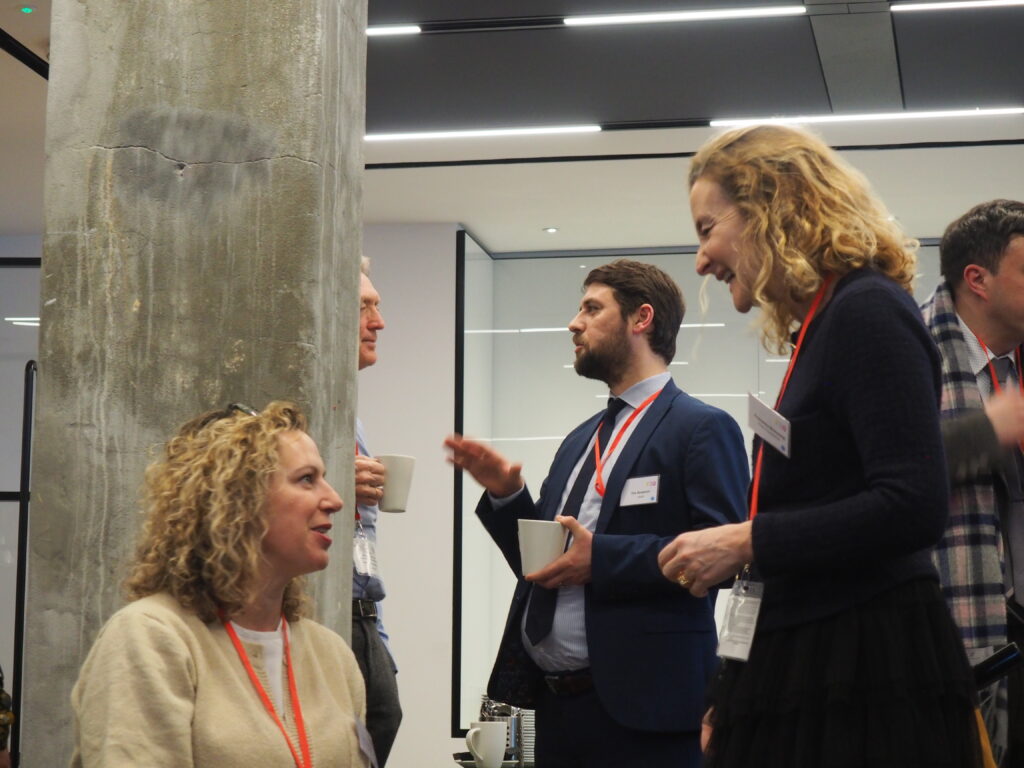
All of these discussions, particularly those in the World Café sessions, understood that this year’s G20 cycle operates within a particularly complex social and political contexts. Much of this year’s focus is on economic prosperity and deregulation, energy security and affordability, along with technology and innovation. This leaves little room for engagement beyond finance-focused themes from the US G20 presidency, with limited prioritisation of climate action, the Sustainable Development Goals, and inclusive stakeholder participation. Against this backdrop, F20 is committed to keeping momentum on climate, equity, and sustainable development, bridging the US presidency and laying strong groundwork for renewed, comprehensive engagement under the subsequent UK G20 presidency.
F20’s 2026 Recommendations to the G20 will be launched online on March 12th. The details of this event will be shared in the coming days. Until then, we invite you to engage with F20’s previous Recommendations. The Recommendations reflect the combined focus of the entire F20 network, which is made up of foundations and philanthropic organisations from around the world who are all committed to implementing effective climate action, sustainable development and inclusive societies. Together, we create a set of policy asks for G20 decisionmakers that is actionable, global, climate-focused, and deeply rooted in socio-economic transformation.