In 2025, F20 divided our work between the G20 processes in South Africa and the Brazilian COP30; we advocated for climate action and the implementation of the SDGs under South Africa’s G20 presidency throughout the year, and bridged that work by supporting the COP30 process in Belem from afar. With both the G20 Leaders’ Declaration published and the COP30 negotiations concluded, we at F20 are embracing this opportunity to take stock of the outcomes and commitments made this year.
In this article, we are looking at the key questions of: How did strong global demand for effective climate action shape the G20 and COP30 discussions this year? What positive steps do we see in the G20 Leaders’ Declaration, the Mutirão text, and the Belem Package? Where did the multilateral processes break new ground, and where did they fall short? What can we build on for next year?
The South African G20 Presidency, which hosted the very first G20 Summit held on African soil, demonstrated a unified commitment to Ubuntu, solidarity, multilateralism, and reducing inequality. This year’s presidency, which was the final country to host in the Global South round, resulted in an inherently African G20 summit, which excelled in highlighting relevant issues for African countries, and championing African-led solutions.
Speaking about the values which guided the South African G20 Presidency, Raisa Cole, F20’s 2025 South African Chair, and the Climate Governance Lead at Democracy Works Foundation, says,
“We saw from the South African presidency how important it was to collectively commit, as G20 countries, to a progressive agenda. In this sense, the Leaders’ Summit, and also the Social Summit, served as a recommitment of the world’s most advanced economies, to the collective values of sustainability, equality, and solidarity. If the G20 did nothing else this year, it at least demonstrated that more than half of the world still cares about similar things”
Despite the geopolitical tensions surrounding the meeting, which included a notable US boycott of the final sessions, the Summit managed to adopt a declaration. The G20 South African Leaders’ Declaration made it clear that climate change and adaptation, more ambitious renewable energy targets, social equity, and innovative finance are among the highest priority issues for South Africa.
We’re heartened to see the Leaders’ Declaration feature a wide-ranging and ambitious set of calls to action, including:
- Strengthening the Common Framework, improving debt transparency, advancing resilient debt clauses, and exploring voluntary debt-for-climate or debt-for-development swaps, though the outcomes fall short of the actionable measures proposed in the African Expert Panel Report on Growth, Debt and Development, led by former South African Finance Minister, Trevor Manuel.
- Enhancing multilateral development bank (MDB) financing, including through capital reforms and the reallocation of Special Drawing Rights (SDRs), which are important steps but still insufficient in scale given the depth of the current debt and climate finance crises.
- Re-emphasising the G20’s commitment on tripling renewable energy capacity and doubling energy-efficiency improvement rates by 2030, a critical confirmation of urgently required acceleration of implementation pathways, clear intermediary milestones and adequate financing mechanisms, including actionable de-risking as well as bankability solutions and project investment platforms.
- Expanding access to low-cost financing, technology transfer, blended finance instruments, and risk-mitigation tools to empower developing countries’ energy transitions.
- Commitments to strengthen food system resilience, reduce food loss and waste, and to support women and youth farmers were also highlighted.
The Summit also launched the G20 Critical Minerals Framework, a voluntary, non-binding blueprint aimed at promoting inclusive and sustainable value chains so that critical minerals can become drivers of shared prosperity rather than sources of vulnerability. While this is an important signal, its voluntary nature and lack of enforcement mechanisms raise concerns about whether it will be sufficient to prevent new forms of extractivism, environmental degradation and human rights violations. The declaration also welcomed the Voluntary and Non-Binding High-Level Principles on Sustainable Industrial Policy, as well as the launch of the Ubuntu Legacy Initiative, a partnership with the African Development Bank designed to accelerate cross-border infrastructure development across the continent.
While the Declaration is undoubtedly an ambitious text, it should have been stronger in its operationalisation. There is a noticeable lack of binding commitments, concrete timelines, or tangible action steps that will translate Africa’s priorities into global achievements. Implementation will depend heavily on the resolve of individual governments as well as the pressure and engagement of civil society, philanthropy, and other non-state actors, which once again places a disproportionate burden on those already working with limited resources to uphold multilateral commitments.
F20, in collaboration with Democracy Works Foundations, IPASA and WINGS submitted a brief of action points from philanthropy’s perspective informing the G20 Social Summit, whereby we emphasised the role of public–private–philanthropic collaboration, among other key issues. We were thrilled to see this inclusion in the final G20 Social Summit Declaration, which highlighted the pivotal role philanthropy can play in innovative financing: “We strongly encourage closing the SDG financing gap through innovative partnerships, including expanding public-private-philanthropic partnerships, strengthening multilateral financing”. For philanthropy, this moment presents both an opportunity and an imperative: to help operationalise the broad commitments of the declaration, push for accountability, and deploy catalytic capital where governments have left implementation gaps.
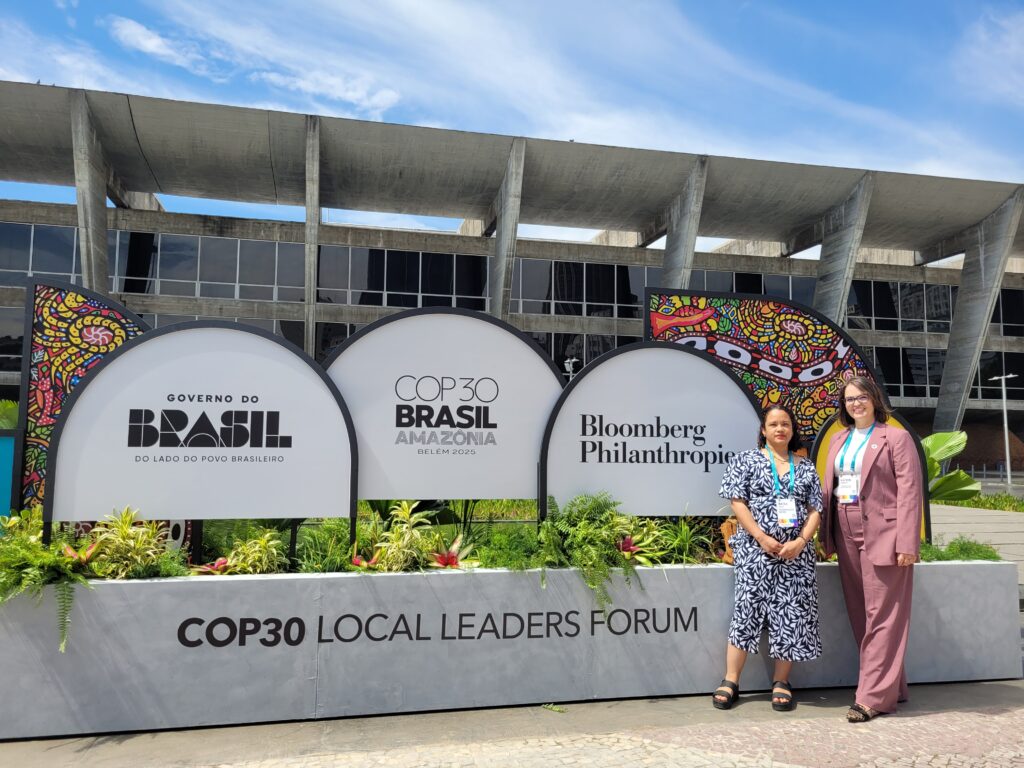
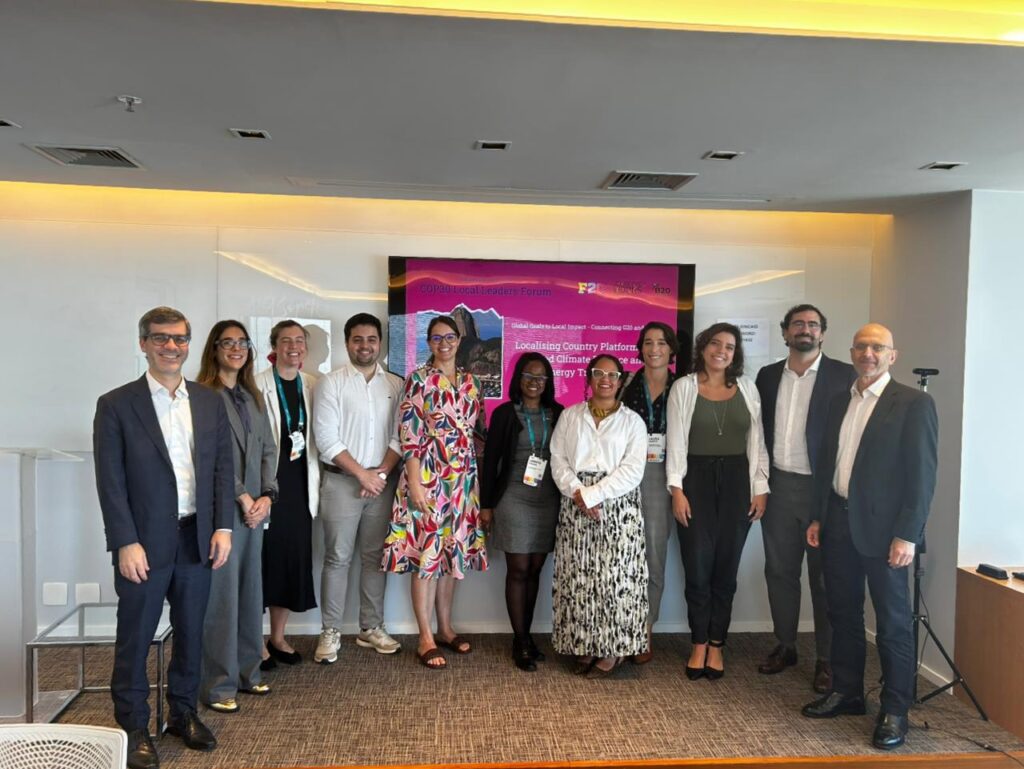
Philanthropy was front and centre at the COP30 Local Leaders Forum, which Bloomberg Philanthropies co-hosted with the COP30 Presidency. Discussions at the forum reinforced the importance of local action in global climate solutions. Katrin Harvey, Secretary General of F20, attended the forum alongside the South African F20 Chair, Raisa Cole. Alongside B20, F20 and Democracy Works Foundation co-hosted a side event to operationalise contributions from private, public and philanthropic sectors.
“The shared commitment from philanthropy and local leaders for climate action gives us real hope that we can accelerate the transition to a just, resilient, and sustainable future. Foundations and philanthropic organisations are indispensable pillars of climate action. They are showing bold leadership by mobilising greater resources for adaptation, advancing the health–climate nexus, and sustaining the vital work of civil society and activists, both at G20 and at COP30. Equally inspiring is the momentum from local and regional governments. At the COP30 Local Leaders Forum in Rio, 14,000 cities, towns, states, regions, and provinces from every continent affirmed their readiness to act”, says Katrin Harvey.
Closely connected to the developments in South Africa, COP30 in Belem was a central point for critical discussions about climate finance, adaptation, and the just transition. The G20 Declaration’s recognition of the financial power leveraged by philanthropy was clearly held in the busy COP halls. A number of significant philanthropic pledges and initiatives were announced, including:
- A $300 million commitment from major philanthropic foundations to the Belem Health Action Plan, with funders including Bloomberg Philanthropies, Gates Foundation, Rockefeller Foundation, and Wellcome Trust.
- The Gates Foundation pledged $1.4 billion to support smallholder farmers, an essential group in the fight against climate impacts on food systems.
- The Rockefeller Foundation committed $5.4 million to strengthen Brazil’s food systems, focusing on linking regenerative agriculture with Brazil’s National School Feeding Program.
- The TFFF initiative secured $5.5 billion in initial commitments, with endorsement from 63 countries
At the outset of the conference, the Brazilian Presidency outlined the intention for COP30 to support “trust and hope in the fight against climate change by bringing science, equity and political determination together, promoting information integrity and strengthening multilateralism, connecting the process with people on the ground and accelerating the implementation of the Paris Agreement.” As the 1.5-degree target looms large, attendees and onlookers have questioned whether COP30 achieved its lofty goals.
The conference did culminate in the approval of the Belem Package, a comprehensive set of initiatives aimed at driving global climate action and accelerating progress toward climate justice. A central highlight of the Belem Package was the commitment to triple adaptation finance by 2035, with a strong emphasis on the urgent need for developed countries to significantly increase their climate finance contributions to developing nations. While this target provides important political signalling, the delayed 2035 timeline, rather than the 2030 deadline long demanded by vulnerable countries, shows the persistent gap between climate impacts and financial response. The summit also concluded the Baku Adaptation Roadmap, setting the course for the 2026-2028 period leading up to the next crucial Global Stocktake of the Paris Agreement.
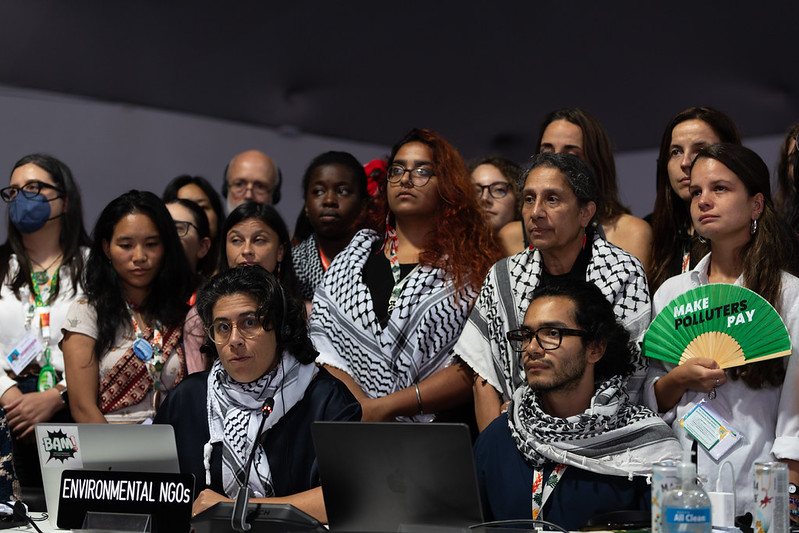
COP30 also saw the launch of the new Country Platforms Hub under the Green Climate Fund Readiness Programme, alongside announcements by 13 countries and one region to develop national investment platforms to better align climate and development finance with national priorities. This is a very promising approach to strengthen country ownership, leadership and implementation. At the same time, we caution that the rapid proliferation of new country platforms is not in itself a guarantee of success. What will really matter is whether these platforms are designed in a genuinely country-driven, inclusive and well-co-ordinated way, and are embedded in strong national planning and governance systems. If done well and with sufficient long-term political backing, country platforms can become a powerful tool to translate global ambition into real, scalable investment and impact on the ground.
Part of the Belem Package, the Global Mutirão focuses on the implementation of climate action, ensuring that global adaptation efforts do not lose momentum. This initiative is linked to the Action Agenda, which aims to ensure the considerable potential posed by the Belem Package is implemented by mobilising the necessary resources and frameworks to reach the Baku NCQG target of $1.3 trillion for climate finance by 2026. Crucially, there is no mention of fossil fuels, despite a focus on the implementation of climate action. A major political disappointment of COP30 was the failure to adopt President Lula da Silva’s proposal for a formal global roadmap to phase out fossil fuels. Despite support from more than 80 countries, opposition from key fossil-fuel-producing states reduced the initiative to a voluntary signal rather than a binding process.
This intentional avoidance of fossil fuels bristled many. Among them was Laurence Tubiana, France’s chief climate diplomat at the 2015 Paris deal, reiterated the necessity of emissions discussions at a COP, saying: “What is the point of meeting for a COP if you do not want to think about NDCs? What is the point of the Paris agreement if you don’t address this? They are being irrational”. We support the initiative led by Colombia and the Netherlands for the First International Conference for the Phase-Out of Fossil Fuels, which will be held in April 2026. The leadership shown by countries who insist on keeping global decisions ambitious and accountable should be lauded.

Looking forward to the 2026 G20 Presidency, which will be held by the United States of America, F20 and the philanthropic community at large need to work together to show up with solutions, encourage ambitious leadership and advocate jointly for the implementation of the SDGs as well as the Paris Climate Agreement. At F20, we will work tirelessly to push within the G20 space to deliver on our key concerns. Given the urgency of COP30 and G20 outcomes, philanthropy must take a more active and catalytic role in advocating for stronger government leadership. Climate finance must be broader and people-centred, and philanthropy is uniquely positioned to drive this change by de-risking innovation, supporting frontline communities, and strengthening accountability for public commitments.
